Meet the Board
The Critical Political Economy research network is run by a board of five people, with support from advisory and associate board members. This board is supported by an international advisory board made up of a number of leading academics who broadly fall within the network’s remit of interest. Take a moment to meet the board (as of August 2017) below.
Yuliya Yurchenko, Chair of CPERN

I am a Senior Lecturer in Political Economy at the University of Greenwich, the Greenwich Political Economy Research Centre (GPERC) and the Political Economy, Governance, Finance and Accountability Institute (PEGFA, Greenwich). I teach and supervise on History of Economic Thought: Economics and Political Economy of Human-Nature relationship, and Business Ethics and CSR.
I research state/society/capital complexes and their power dynamics, transnational class formation, modes of accumulation of capital, the limits of the possible embedded in them, and avenues of circumventing the latter interrogated through a transnational historical materialist/Neo-Gramscian methodological perspective. My empirical foci are: public services and policies (especially energy), the political economy of Ukraine, transforming landscapes of trade regimes (mainly TTIP and TiSA) and capital accumulation spaces; and global networks of policy platforms and lobby groups.
My recent monograph is titled Ukraine and the Empire of Capital: from Marketisation to Armed Conflict (Pluto: 2018).
Bernd Bonfert, Vice-Chair of CPERN

I am an Assistant Professor in Economics at EM Normandie. My research and teaching revolve around the political economy of socio-ecological transformations and grassroots social movements.
I investigate how policymakers, active citizens and social enterprises can develop more environmentally sustainable, democratic and socially just alternatives for organising our essential systems of (re)production – and how these alternatives can be expanded and institutionalised at scale. My most recent work focused on the governance and upscaling of local energy communities, as well as the expansion of short and sustainable food supply chain systems through community-supported agriculture.
Moreover, I am an associate editor of Global Political Economy and build bridges between academia and communities of practice in the German Community Supported Economies (CSX) Network.
Gemma Gasseau, Board member
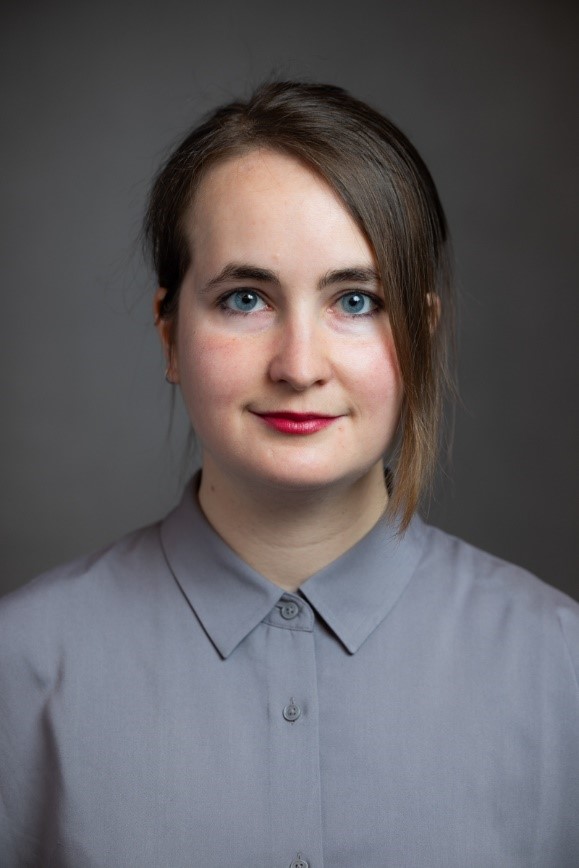
Gemma Gasseau is a PhD Candidate and Research Fellow at Scuola Normale Superiore (Firenze, Italy). With an interdisciplinary background, she researches (global) economic structures, in their contradictions and condition for transformation. Her research interests include transnational governance, eco-social policies and environmental politics. In her PhD thesis, she investigated the governance of water services in the EU and has recent articles in Globalizations and Global Political Economy.
Madelaine Moore, Board member
Madelaine Moore is a Postdoctoral Researcher in German and Transnational Social Policy at the Department of Sociology, University of Bielefeld. She recently published a book, Water struggles as resistance to neoliberal capitalism, and which was the subject of one of recent monthly workshops here. She also has publications in Geoforum, European Journal of Social Security, and Review of International Political Economy.
Adriano Cozzolino, Board Member

Adriano Cozzolino is Assistant Professor of Global Politics and European Studies at Università della Campania “L. Vanvitelli” (Italy) and director of the research branch of the Italian Institute for the Future. His research mainly focuses on the transformations of the State in the era of neoliberal globalization, the political economy of technocracy, Futures Studies and critical theory. He authored the monograph Neoliberal Transformations of the Italian State: Understanding the Roots of the Crises (2021) and several articles appeared, inter alia, in the Journal of Common Market Studies, Globalizations, and the British Journal of Politics and International Relations.
Owen Worth, Advisory Board Member
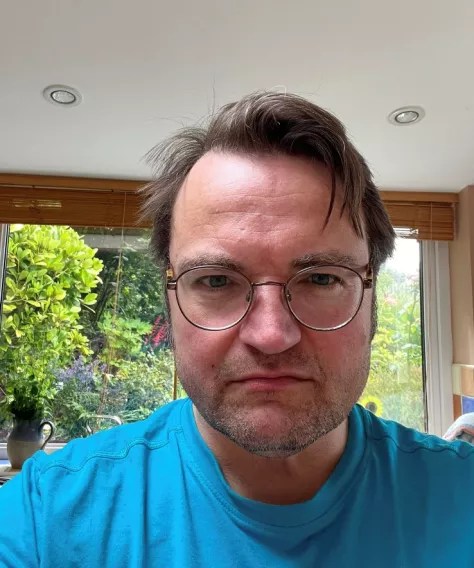
Professor Owen Worth is the Head of the Department of Politics and Public Administration at the University of Limerick. He works, teaches and publishes in the wide areas of International Political Economy and Global Politics and has published on class, hegemony, resistance, political movement from both the right and left and on International Relations (IR) theory. He is the author of 4 books, a co-editor of a number of collections and has published in several journals throughout his career. He is the Managing Editor of the long-standing journal Capital & Class, which is published by Sage.
David Bailey, Advisory Board member
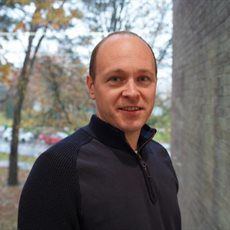
I am a Associate Professor in Politics at the University of Birmingham. My research and teaching focus on protest movements and contemporary capitalism. I am on the editorial board of the journals Capital & Class and Global Political Economy, and have recent articles in Environmental Politics and Work, Employment and Society.
Associate Board Members
Mònica Clua-Losada, co-editor in chief, Global Political Economy
Phoebe Moore, co-editor in chief, Global Political Economy
The international advisory board is composed of:
Mònica Clua-Losada (The University of Texas Rio Grande Valley, USA), Bastiaan van Apeldoorn (VU University Amsterdam, the Netherlands), Dorothee Bohle (Central European University, Hungary), Ian Bruff (University of Manchester, UK), Jan Drahokoupil (University of Mannheim, Germany), Eva Hartmann (Copenhagen Business School, Denmark), Laura Horn (Roskilde University, Denmark), Martijn Konings (University of Sydney, Australia), Magnus Ryner (King’s College London, UK), Phoebe V. Moore (Essex), Susanne Soederberg (Queen’s University, Canada), and Angela Wigger (Radboud University, Netherlands).
Go to ‘Getting Involved‘ to see how you can join our growing community of academics and activists in the study and practice of critical political economy.
 Critical Political Economy Research Network (RN06)