Unfortunately we’ve had to cancel this workshop. We hope to reschedule it at some other date.
Speaker:
Susanne Soederberg is a Professor at the Department of Political Studies and Department of Global Development Studies at Queen’s University. She has been awarded the prestigious Jane and Aatos Erkko Visiting Professorship in Studies of Contemporary Society (2015-2016) at the Helsinki Collegium for Advanced Studies where she is undertaking research on the linkages between low-income housing, finance and social reproduction in Berlin and Dublin.
Discussants:
Darragh Golden, Assistant Professor, University College Dublin
Laura Stegemann, Independent Researcher
Find the article here: https://journals.sagepub.com/doi/full/10.1177/0308518X251361632
Abstract
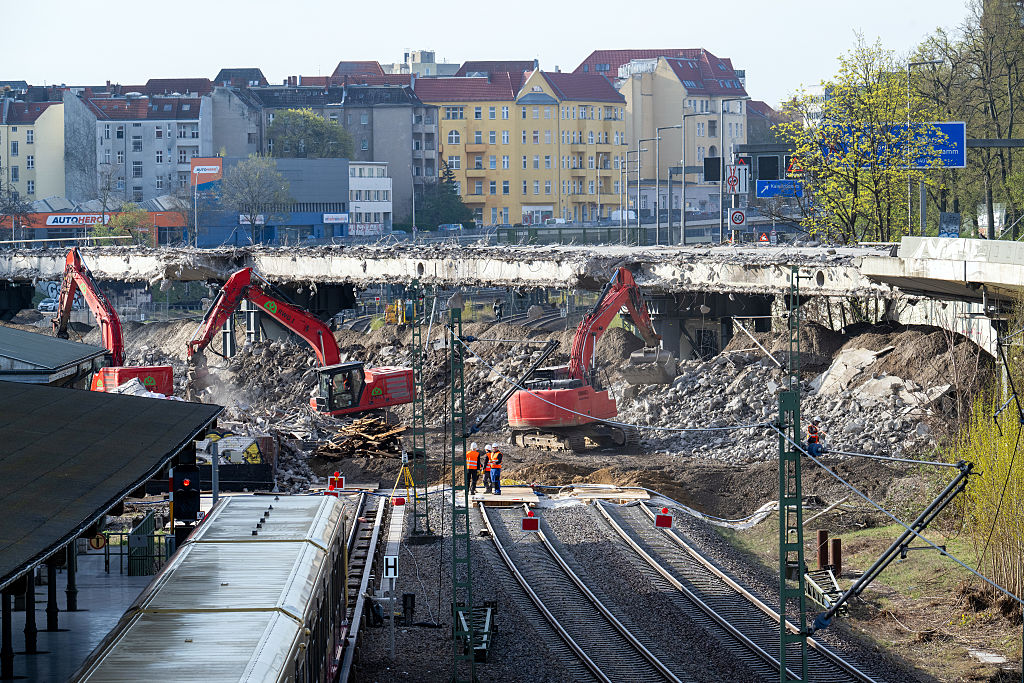
Highways are vital to global supply chains, enabling the dominant form of circulating goods inland by truck. Within critical economic geography and related disciplines, however, insufficient attention has been placed on developing a radical highway geography that positions highways within the evolving relationships between global capital, state scales and the labour of moving goods. I fill this silence by applying a historical-geographical materialist lens to Germany’s most congested, costly, and controversial highway – Berlin’s intercity A100 – to explore the entanglements of highways, labour power and the capitalist state within the socio-spatial and temporal dynamics of global capitalism. By following the A100 from the 1950s to the proposed completion of its contentious 16th extension in 2025, I argue that the 16th construction phase is the outcome of continual attempts by the capitalist state – at various scales of intervention – to annihilate space through time. These time–space compressions, which are incomplete, contradictory and contested, facilitate the circulation of commodities – understood here as urban freight and labour power – across space more rapidly and at lower cost, leading not only to a remaking of city logistics but also in the embodied labour of truck drivers, whose working lives increasingly reflect the pressures of accelerated circulation.
See you there!
Your CPERN Board
 Critical Political Economy Research Network (RN06)